About Ball Valve Castings
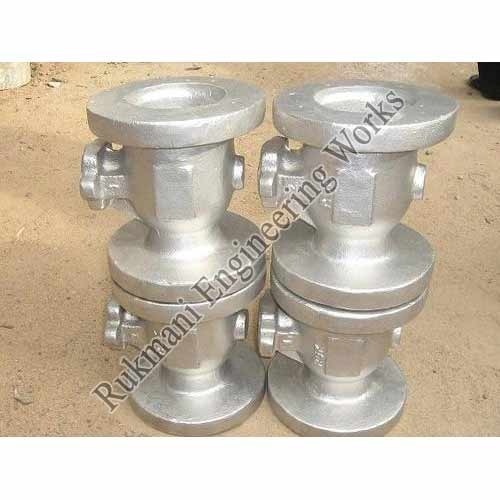
We have scaled to the newer heights of success by offering a high quality Ball Valve Castings. The offered castings are widely used in the designing of ball valve. These are precisely manufactured under the guidance of our seasoned professionals using excellent grade materials. Our provided castings are stringently tested on certain parameters to ensure its durability and flawlessness. Also, we provide these Ball Valve Castings in various sizes and can be customized as per the choice of our clients.
Features:
- Heat resistance
- Optimum strength
- Corrosion resistance
Advanced Casting Techniques for PrecisionBall valve castings are produced using investment, sand, and precision casting processes, delivering dimensional accuracy and excellent surface finish. This versatility enables adaptation to complex designs and customer specifications, ensuring compatibility with a wide range of industrial requirements.
Reliable Performance Across Demanding EnvironmentsTested as per international standards (ASTM, API, ASME, ISO), these castings offer premium corrosion resistance, especially in stainless steel grades, and temperature resilience from -20C to 250C. Custom anti-corrosive coatings are available, enhancing effectiveness in challenging chemical, petrochemical, and waterworks settings.
Complete Customization and TraceabilityDesigns, sizes, port dimensions, body structures (two or three-piece), and bore options (standard/full) can be tailored to application needs. Each casting provides full material traceability with certification, packing in export-worthy wooden boxes, and optional finishing techniques such as shot blasting or painting.
FAQs of Ball Valve Castings:
Q: How are ball valve castings tested for quality and reliability?
A: Ball valve castings undergo ultrasonic, pressure, radiography, and dye penetrant tests to ensure integrity and compliance with ASTM, API, ASME, and ISO standards. Testing is conducted as per customer or regulatory requirements, guaranteeing reliable performance in demanding applications.
Q: What casting processes are available for manufacturing ball valve bodies?
A: Manufacturing options include investment casting, sand casting, and precision casting. These methods provide flexibility for complex designs, varying weights (0.5 kg to 500 kg), and excellent surface finishes suitable for industrial, petrochemical, and waterworks use.
Q: When should I request anti-corrosive coatings for ball valve castings?
A: Anti-corrosive coatings are recommended when valves operate in harsh or corrosive environments (e.g., chemical, oil & gas, petrochemical sectors). Coatings can be applied on request to enhance durability and extend valve service life.
Q: Where are these ball valve castings typically used?
A: Ball valve castings are employed worldwide across industries such as oil & gas, chemicals, petrochemicals, waterworks, and general industrial processes, where reliable flow control and high corrosion resistance are essential.
Q: What benefits do soft-seated and metal-seated sealing options offer?
A: Soft-seated options provide excellent sealing for low-pressure, non-abrasive media, while metal-seated designs withstand higher pressures and abrasive or high-temperature conditions, offering flexibility and reliability across different applications.
Q: How can ball valve castings be customized to project requirements?
A: Customization includes material selection (stainless, carbon, alloy steel), size (port sizes from 1/2 inch to 24 inch), operation mode (manual, pneumatic, electric), connection types, body structure, bore, channels, and surface finishes. Designs are tailored according to customer specification and international standards.




 Get Latest Price


 Send Inquiry
 Send Inquiry
 Send SMS